From data spaces to digital twins: re-cap of the Living-in.EU Digital Assembly 2026
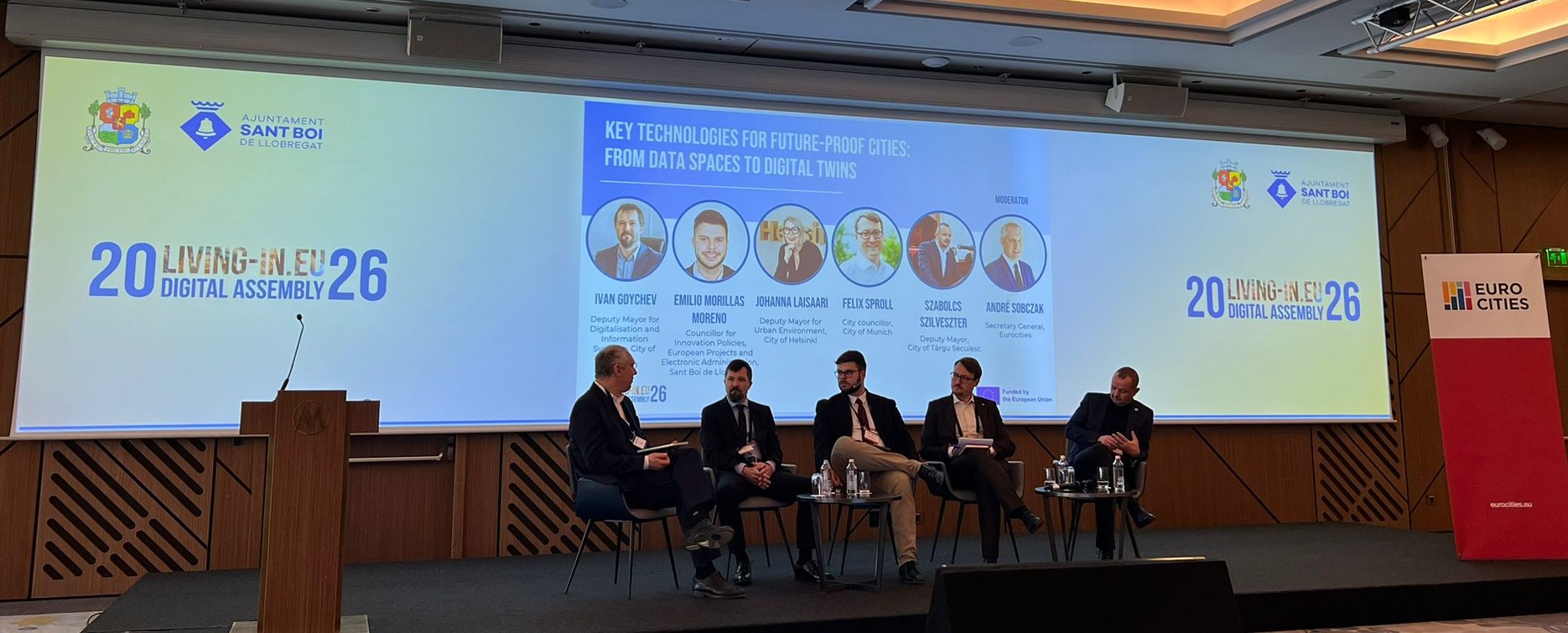
Across Europe, cities are under growing pressure to respond to complex and interconnected climate challenges, from heatwaves and flooding to mobility, energy and social inclusion.
Digital technologies are increasingly seen as part of the solution. Yet the real challenge lies not in adopting technology for its own sake, but in choosing the right tools to address real urban needs, and ensuring they deliver tangible benefits for people.
At the heart of this transformation is data. Without reliable, well-governed data, cities cannot effectively deploy technologies such as AI or digital twins. At the same time, local governments must balance innovation with accountability, ensuring transparency, protecting digital rights, and maintaining public trust.
Climate resilience is now a key driver of digital investment. Cities are turning to data platforms and digital twins to simulate risks, test solutions, and make informed decisions before acting in the real world, helping them avoid costly mistakes and better prepare for the future.
A shared European approach in Sofia
These challenges were at the centre of the Living-in.EU Digital Assembly 2026, which brought together city leaders, EU policymakers and digital experts to explore how digital technologies can support sustainable and climate-neutral cities. Currently, Living-in.EU unites more than 220 cities and regions from across Europe and supports them in using technology to become more sustainable and climate-neutral.
This year’s Digital Assembly explored the journey from identifying needs to building data ecosystems and ultimately using digital twins to guide urban planning and resilience strategies.
Opening the meeting, Ivan Goychev, Deputy Mayor for Digitalisation and Information Systems at the City of Sofia and co-chair of Living-in.EU, underlined the importance of linking political ambition with practical implementation. Cities, he noted, “must use technology to become more liveable, more vibrant, and green for our citizens, while solving everyday problems quickly and effectively.”
This emphasis on impact was echoed by Emilio Morillas Moreno, City Councillor for Innovation and EU Projects at the City of Sant Boi de Llobregat, who is also co-chair of the initiative. He highlighted the need for an inclusive approach to digital transformation.
“In Sant Boi de Llobregat, this means combining technological innovation with support for citizens to use new tools effectively,” he explained. “Citizens need education, but they also need support.”
Cities and Europe: working together
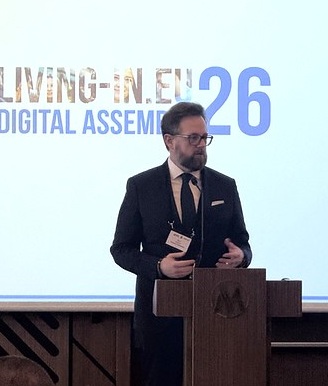
The European dimension of this transformation was a recurring theme throughout the Assembly. In a keynote address, Mark Smitham, Policy Officer for Artificial Intelligence for Societal Good at the European Commission, highlighted the central role of cities in delivering Europe’s digital ambitions.
“Digital transformation is achieved through the decisions made across thousands of municipalities,” said Smitham, pointing to the importance of the local level in shaping outcomes. He noted that the EU is supporting this work through funding programmes, regulatory frameworks, and initiatives linked to data, AI and digital infrastructure, helping cities deploy technologies such as digital twins.
When cities lead, Europe succeeds
— Smitham added, underlining the importance of alignment between European priorities and local implementation.
Choosing the right technologies
Local governments face growing pressure to deliver better services, manage risks, and improve quality of life, often with limited resources. Technology can help bridge strategy and implementation, but choosing the right solutions requires careful consideration of investment, data and governance.
From AI tools to data platforms and digital twins, cities must navigate a complex landscape of options, balancing potential benefits with questions of cost, scalability and long-term value. Ensuring interoperability and aligning technologies with public needs is key.
These challenges were the focus of the Digital Assembly’s political discussion.
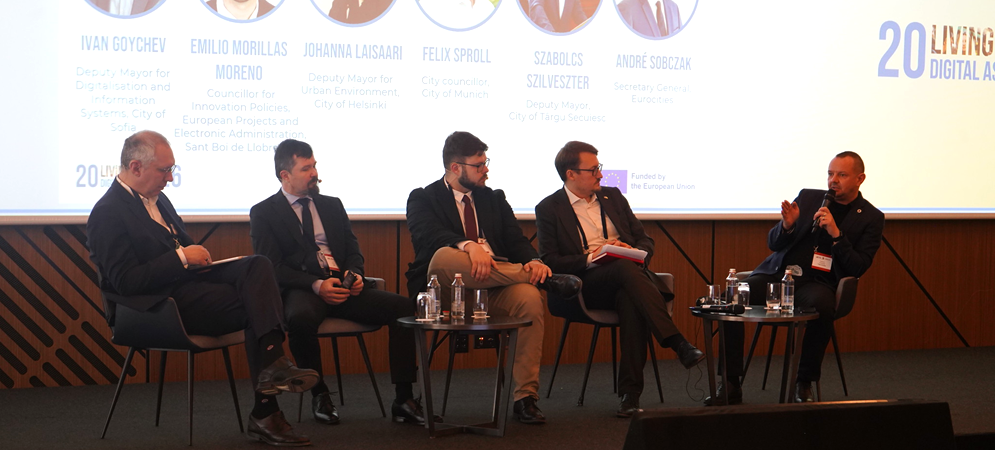
In the city of Sofia, open data has become a foundation for innovation. By publishing real-time public transport data, the city has enabled developers and members of the public to create applications that improve journey planning and service accessibility for residents.
The city has also invested in participatory tools such as the Sofia Decides platform, allowing residents to propose and vote on local projects. These initiatives highlight that digitalisation is as much about governance and engagement as it is about technology.
“Technology is not a problem. The problem is how you adopt it, how you use it, how you engage the citizens,” explained Ivan Goychev. “Data in an Excel column, sitting somewhere, is not data. It’s about how we link this data to city processes and how we use it to directly improve the lives of our citizens. Data is a workflow.”
In Munich, digital twins are already embedded in everyday operations. The city uses them to visualise urban development scenarios, support infrastructure planning, and improve communication between departments, helping align technical analysis with political decision-making.
“It’s something we use on a daily basis across departments, supporting both planning and decision-making,” said Felix Sproll, City Councillor at the City of Munich.
In contrast, the smaller Romanian city of Târgu Secuiesc demonstrates how proximity to citizens can shape digital priorities. Through direct engagement with residents, the municipality of just under 20 thousand inhabitants can quickly identify local challenges, whether related to services, mobility or the environment, and respond with targeted, practical solutions.
Szabolcs Szilveszter, Deputy Mayor of the City of Târgu Secuiesc, explained: “We can identify the real challenges and opportunities of our society directly, because we are in close contact with our citizens. We can optimise quickly because we get immediate feedback”.
He underlined the important role of European initiatives such as Living-in.EU for finding partners and good examples and called on the EU to prioritise investment in small communities because they can act as testbeds. “Thanks to the initiative, with my small team we identified the most important KPIs in which we should invest, and we signed an EU project on AI and increasing resilience with three other communities,” he explained.
Sant Boi de Llobregat, meanwhile, offers another approach, focusing on improving administrative efficiency and social insight. The city has introduced automation to streamline processes such as financial and service-related procedures, significantly reducing waiting times.
“At the beginning, the process was long, but in general it is simple,” said Emilio Morillas Moreno. “Once the application is registered, no one needs to do anything, a robot can carry out all the steps.” The city is also developing data tools that allow officials to analyse demographic patterns, such as identifying vulnerable populations, supporting more targeted and inclusive policymaking.
Across all contributions, a common message emerged: choosing the right technology is not about following trends, but about aligning tools with real needs and delivering meaningful outcomes for citizens.
From strategy to climate action
The second session focused on how cities are translating these strategies into action, particularly through the use of digital twins.
A digital twin is a dynamic, virtual representation of a city that integrates real-time and historical data from multiple sources, such as transport systems, energy networks and environmental sensors. This allows cities to simulate scenarios, test policy interventions, and better understand how different systems interact before implementing changes on the ground.
This shift towards predictive, data-driven approaches is transforming how cities plan for climate resilience.
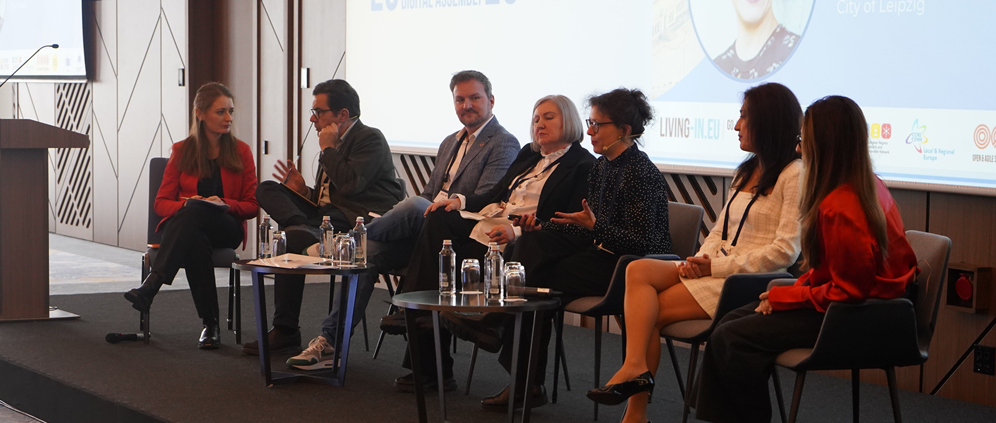
Opening the session, Jordi Ortuno Ribé, Innovation Manager at the City of Barcelona and Co-Chair of the LDT Citiverse EDIC, highlighted how these platforms enable cities to move from reactive to proactive decision-making. “We are talking about a platform able to make simulations and predict and know in advance what will happen,” he said.
Rotterdam offers a clear example of this approach in practice. The city integrates data on water levels, urban heat and mobility flows to simulate climate risks such as flooding and extreme heat. These digital insights are directly linked to real-world interventions, including water plazas and climate-adaptive public spaces designed to manage excess rainfall.
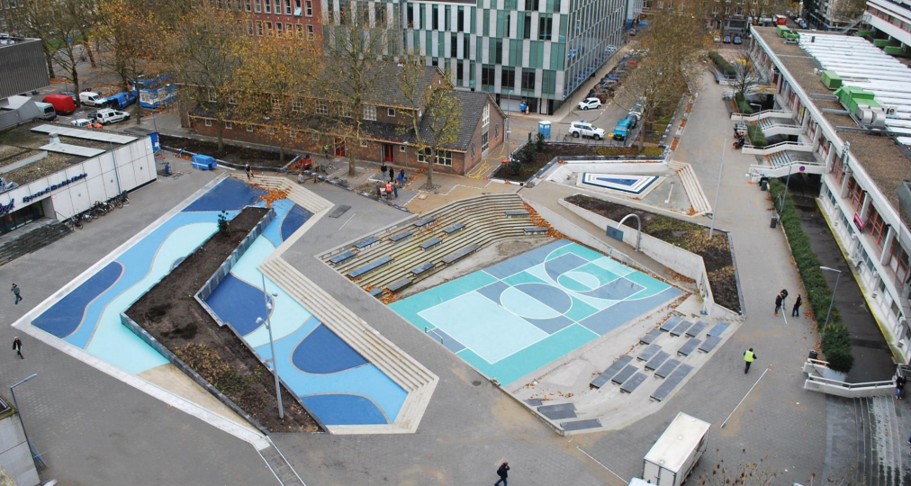
Jochem Cooiman, Digital Innovation Officer at the City of Rotterdam, explained: “It allows you to see much more of what is happening across your city, by connecting data across domains and helping you understand how different systems interact, rather than focusing on a single, isolated use case.”
In the city of Burgas, digital twins are part of a broader strategy for climate neutrality. The city is using them to model energy consumption in buildings, assess renewable energy potential, simulate flood risk scenarios and plan infrastructure investments, supporting more informed decisions across sectors.
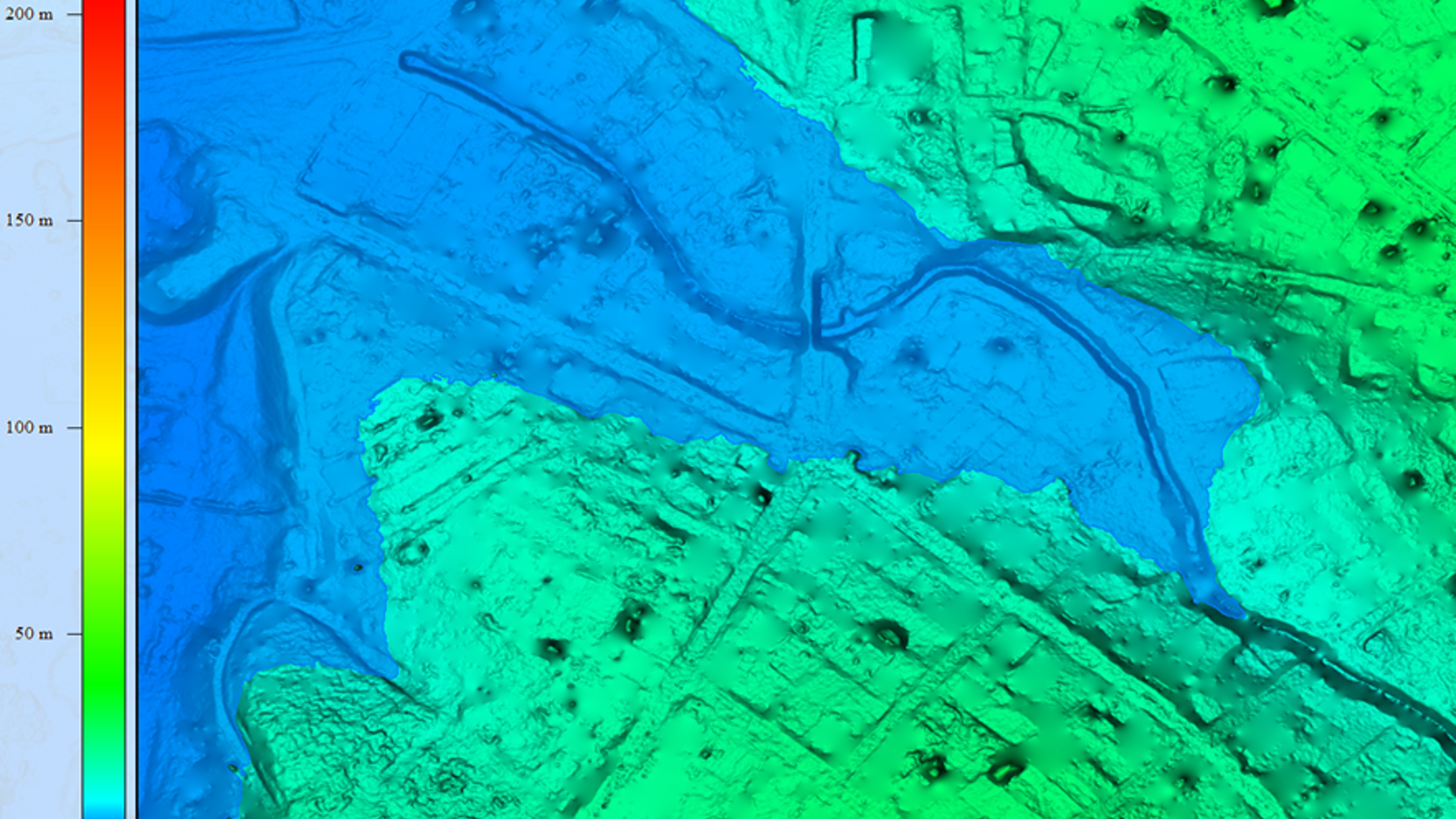
“Digital transformation is not about technology alone. It is about changing the way cities think, decide and act,” stressed Vesna Baltina, Deputy Mayor for Strategic Development, Digitalisation and Climate Adaptation in Burgas.
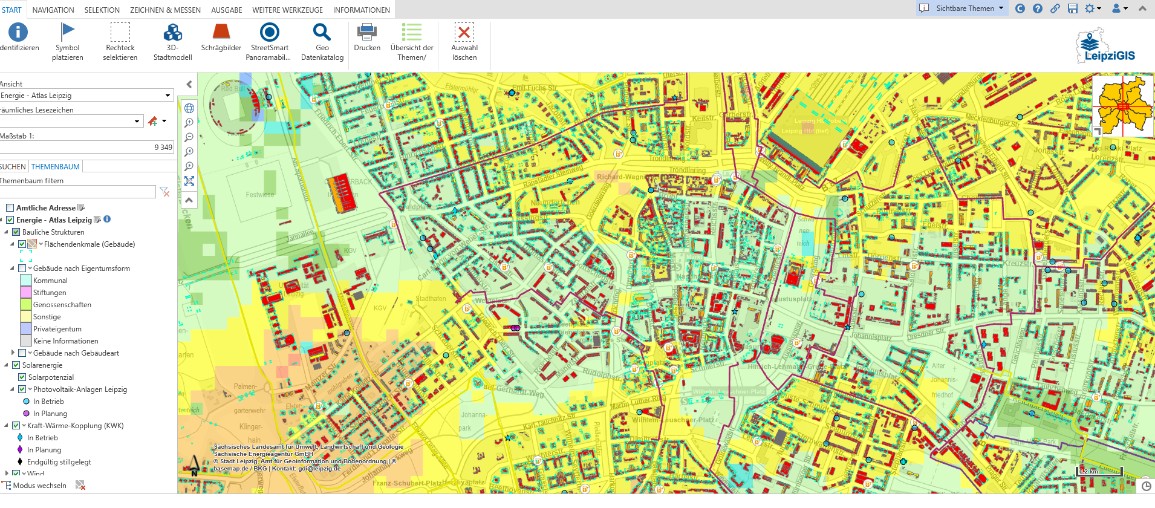
The city of Leipzig is applying similar tools to support its energy transition, particularly in expanding district heating networks and mapping renewable energy potential. “We use digital twins to make faster decisions, but also to engage citizens more,” explained Nadja Riedel, Deputy Head of the Smart City Unit at the City of Leipzig.
Meanwhile, in Sofia, advanced modelling and AI are being used to analyse urban systems such as air quality, mobility and energy use. Dessislava Petrova-Antonova, Research Lead for Digital Twins at the GATE Institute and Professor at Sofia University, explained that the city’s digital twin supports both day-to-day decision-making and long-term planning for climate resilience.
She added: “The heart of the digital twin is data, and how we use it to analyse systems like air quality, mobility and energy, helping our city make better decisions for both daily operations and long-term climate resilience.”
A shared path forward
Across both sessions, one message stood out: technology alone does not make cities future-proof.
Success depends on how cities define their priorities, engage citizens, and build the capacity to use digital tools effectively. It requires aligning political vision with technical implementation, and ensuring that innovation supports climate resilience, sustainability and inclusion.
André Sobczak, Secretary General of Eurocities, noted: “Digital transformation in cities must always start from people’s needs and deliver concrete improvements in their daily lives.”
As the Living-in.EU Digital Assembly demonstrated, the future of urban transformation will not just be digital. It will be collaborative, strategic, and firmly rooted in the needs of people and the environment.
The Living-in.EU Digital Assembly is the political advisory body of the network. This flagship event brings together mayors, regional leaders and key stakeholders to debate priorities and provide strategic direction for the twin green and digital transition of European cities and communities.
The 2026 edition took place in Sofia under the theme ‘Key Technologies for Future-Proof Cities: from data spaces to digital twins’. It explored the data-driven journey of cities of all sizes, from identifying challenges, to building federated data spaces, and ultimately deploying digital twins in urban planning.
Read the full programme of discussions, watch the recording and view all the photos from the Digital Assembly.