Key takeaways from the successful Digital Transformation Working Roundtable in Cluj-Napoca
Local governments in Europe are leading the way in sustainable digital transformation, working towards accessible and inclusive public services that leave no one behind. But how can municipalities in EU member states such as Romania move from siloed smart city projects to a coordinated digital ecosystem, using common standards and sharing solutions at European level?
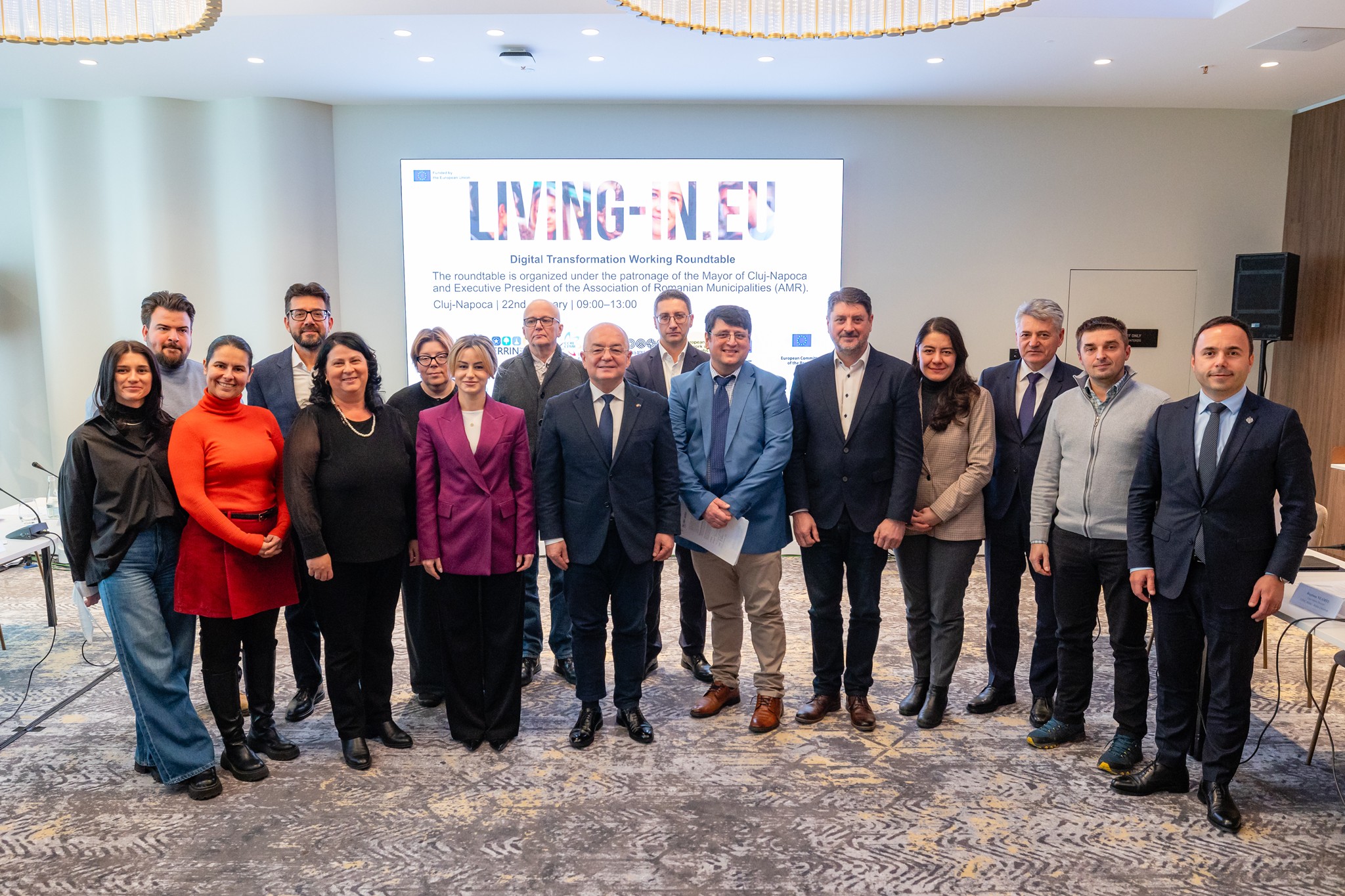
This and other questions were on the agenda of the recent Digital Transformation Working Roundtable, held on 22 January 2026 in Cluj-Napoca. Participants from local and regional authorities, universities and digital innovation hubs met with representatives of European networks and the European Commission to discuss the future of digital public services - and the key role of Romanian local authorities in advancing it.
The event took place under the patronage of Emil Boc, Mayor of Cluj-Napoca and Executive President of the Association of Romanian Municipalities. In his opening words, Mayor Boc made clear that a strong vision of local development combining European cooperation and local innovation can have a direct positive impact on residents' quality of life.
European cooperation allows municipalities to align with objectives of the EU Digital Decade, and to rely on EU funding programmes to finance projects at the local level. To harness these opportunities, initiatives such as Living-in.EU are crucial: Representatives from the movement introduced Living-in.EU as a strategic European framework that supports interoperable, trustworthy and citizen-centred digital public services.
Participants of the roundtable shared experiences of implementing digital projects and discussed the role of local stakeholders in digital transformation: While the simplification of public services through interoperability and common standards emerged as a key need, participants highlighted the importance of keeping digital services inclusive, accessible and human-centred. Reducing administrative burden must go hand-in-hand with transparency and security, and a population with digital skills that can trust its institutions.
The event also allowed participants to discuss funding and investment as drivers of European digital competitiveness and sovereignty, and culminated in the accession of two new members to the Living-in.EU community: During the roundtable, representatives from the City of Cugir and the Association of Communes of Romania signed the Living-in.EU Declaration, thereby confirming the commitment of Romanian local stakeholders to a collaborative approach to sustainable digital transformation in the EU.