

Oulu puts robots and AI to work in education and culture
From robotic dogs and service robots in classrooms to student-designed library robots, Oulu is exploring how artificial intelligence and robotics can enrich learning, culture and public services.
The City of Oulu is developing and testing new robotics solutions together with OSAO, Microsoft, Sanoma Pro and other regional partners. The aim is to understand where robots can genuinely add value, while also identifying where human oversight remains essential.
Current pilots include the Unitree Go2 EDU robotic dog and the Temi service robot. They are being used to explore new approaches to learning, reading literacy and student engagement, as well as the potential for robotics in future city services.
The work builds on Oulu’s wider focus on technology and collaborative learning. Through its STEAM in Oulu network, the city brings together schools, early childhood education and a broad range of partners to encourage children and young people to experiment, create and solve problems using science, technology, engineering, arts and mathematics.
Bringing robots into the classroom
In education, Oulu is investigating how robots can complement existing teaching methods rather than replace teachers.
The Temi robot is currently particularly suited to this work. Its screen, mobility and interactive functions allow students to engage with digital content through a physical presence in the classroom.
Oulu is exploring applications including reading and literacy activities, AI-assisted learning and other interactive exercises designed to increase student engagement.
The Unitree Go2 EDU robotic dog offers another way for students to encounter advanced robotics and artificial intelligence firsthand. It can be used to demonstrate areas such as programming, sensors, movement and autonomous systems, giving learners practical experience of technologies that are likely to play an increasing role in future workplaces.
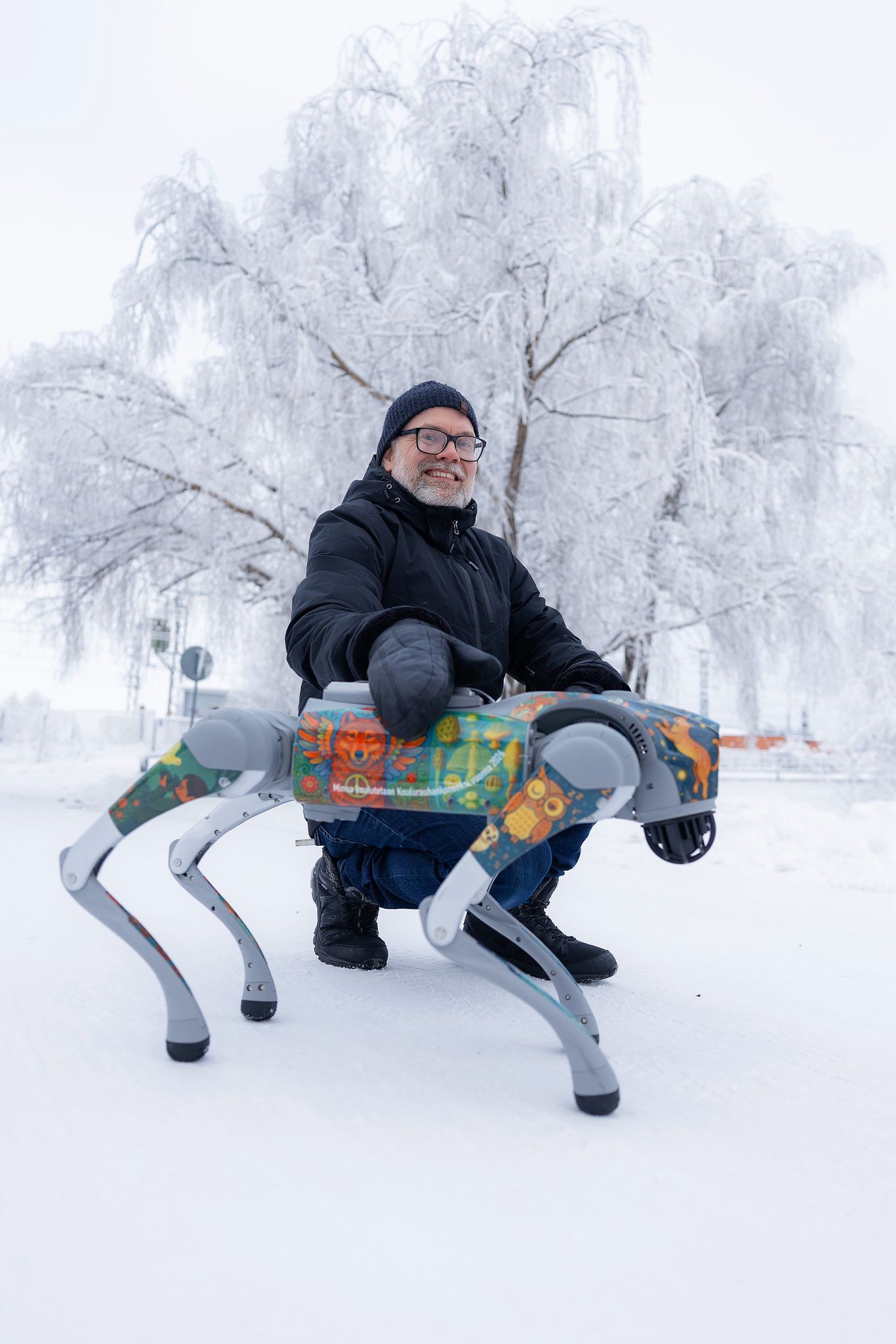
However, Oulu is taking a deliberately cautious approach to autonomy. Current humanoid robots and robotic dogs are not considered suitable for fully autonomous interaction with young children or unsupervised use in public environments.
Educational pilots therefore prioritise the Temi robot and supervised activities, ensuring that teachers and other professionals remain responsible for how the technology is used.
Young people design their own robots
Oulu is not only giving students access to ready-made technologies. Children and young people are also being encouraged to develop ideas of their own.
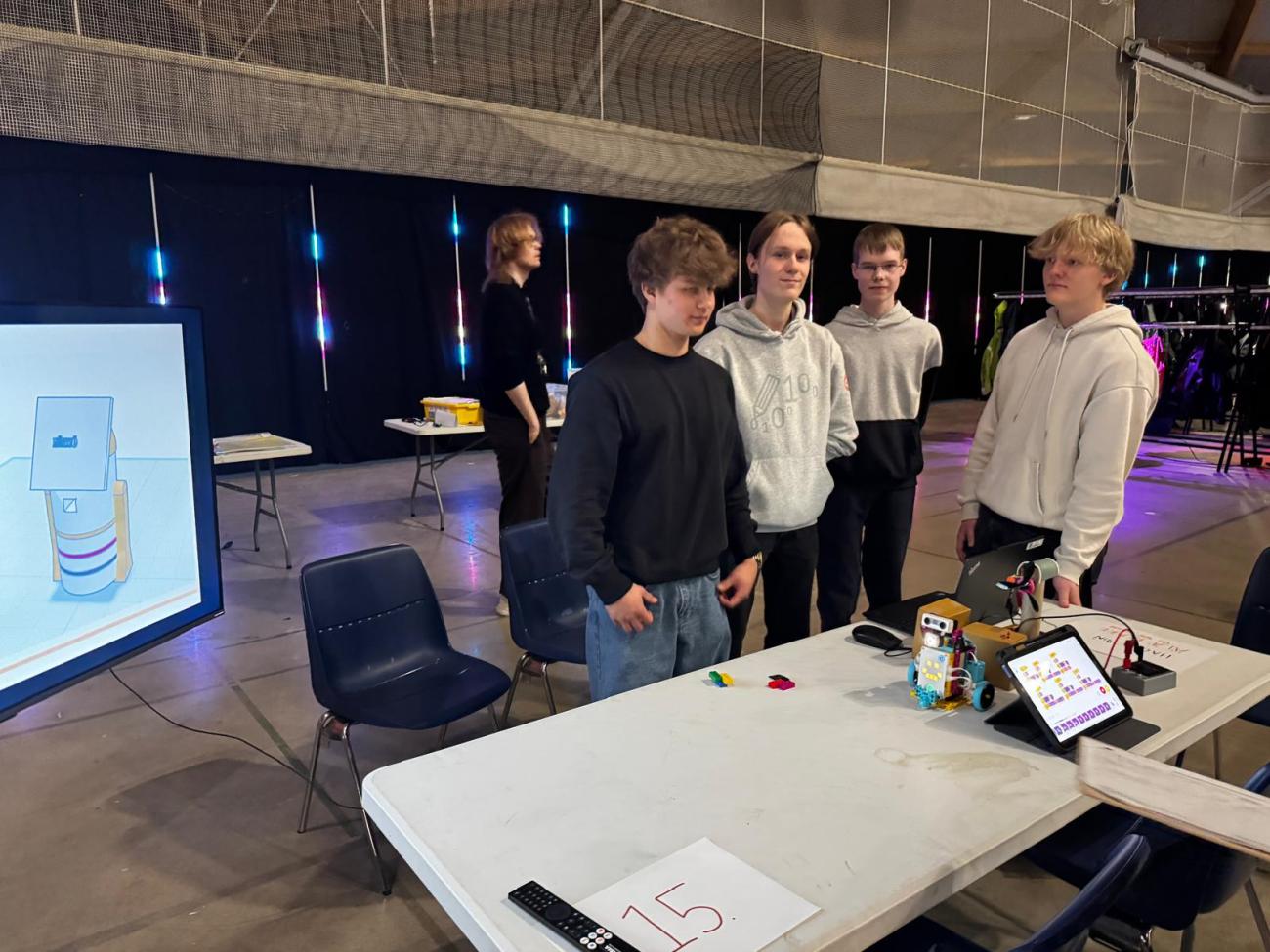
One of the main platforms for this is ToolCamp, the city's annual STEAM competition.
Teams from daycare centres and schools work together on real-world challenges before presenting their ideas to the public and a jury at the ToolCamp Day. The programme emphasises creativity, collaboration, sustainability, problem-solving and the practical use of technology.
Previous student innovations have included several robot prototypes.
The ELI robot was designed to help young people think about career choices, while the Majakka and Libro concepts explored how robotics could be used in libraries.
Majakka, for example, was designed as a library assistant that could greet visitors, recommend books and guide people towards the right bookshelf.
These projects demonstrate an important part of Oulu's approach. Students are not simply learning how existing technology works. They are being asked to identify a need, design a solution and consider how technology could improve everyday life.
That philosophy continues in ToolCamp 2027. Among the competition challenges, young people will examine issues including reliable information in the age of AI, future jobs and how technology could contribute to museums and schools.
Taking robotics beyond schools
Oulu is also exploring how robotics can become part of the city's cultural life. Robotic dogs, humanoid robots and student-developed innovations have been presented at public events, giving residents the chance to encounter emerging technologies outside a laboratory or classroom.
The city is investigating potential future applications for humanoid robots at cultural events, in learning environments and in activities designed to engage residents.
This work connects with Oulu's role as European Capital of Culture 2026, where technology is an important part of the programme.
One of its flagship events is Lumo Art & Tech, a ten-day international festival taking place from 13–22 November 2026. The festival brings together light, sound, digital and media art alongside talks, seminars and other events exploring the relationship between art and technology.
Rather than presenting technology as separate from culture, Lumo Art & Tech is designed around the interaction between the two. Events will take place across Oulu city centre and the Linnanmaa campus, involving the city, universities, museums and private-sector partners.
Testing technology before scaling it up
Oulu's experiments also highlight an important challenge for cities introducing advanced robotics.
A robot that can demonstrate impressive capabilities in controlled conditions is not necessarily ready to work independently in a school, library or crowded public event.
Reliability, safety, accessibility and the ability to respond appropriately to unexpected situations all need to be considered before robots can operate with greater autonomy.
For now, Oulu's approach is therefore based largely on experimentation and supervised use.
Robots can help students explore new forms of learning, introduce residents to emerging technologies and inspire new service ideas, while people continue to make the decisions and take responsibility.
As the technology develops, these pilots will help the city understand which applications are genuinely useful and where robotics can make the biggest difference.
For Oulu, the objective is not simply to introduce more robots into city life. It is to give students and residents the skills and opportunities to experiment with new technology, while learning how it can be used responsibly.
That combination of education, creativity and practical experimentation is allowing the city to explore what a more human-centred future with AI and robotics could look like.
_____
The city of Oulu is among the founding cities of the Living-in.EU movement back on 2019 during the Finish presidency. It previously acted as coordinator of the Digital Transition Partnership of the Urban Agenda. At political level Oulu co-chaired the Living-in.EU Digital Assembly from 2023-2025 and contributed to the development of its Mission statement and to the annual priorities of the Assembly. Oulu introduced the city-as-a-platform concept, where the whole city acts as a platform for testing innovation, together with start-ups and tech companies, always with a view of making citizens’ life better.