

The Hague tests smart technology where city life happens
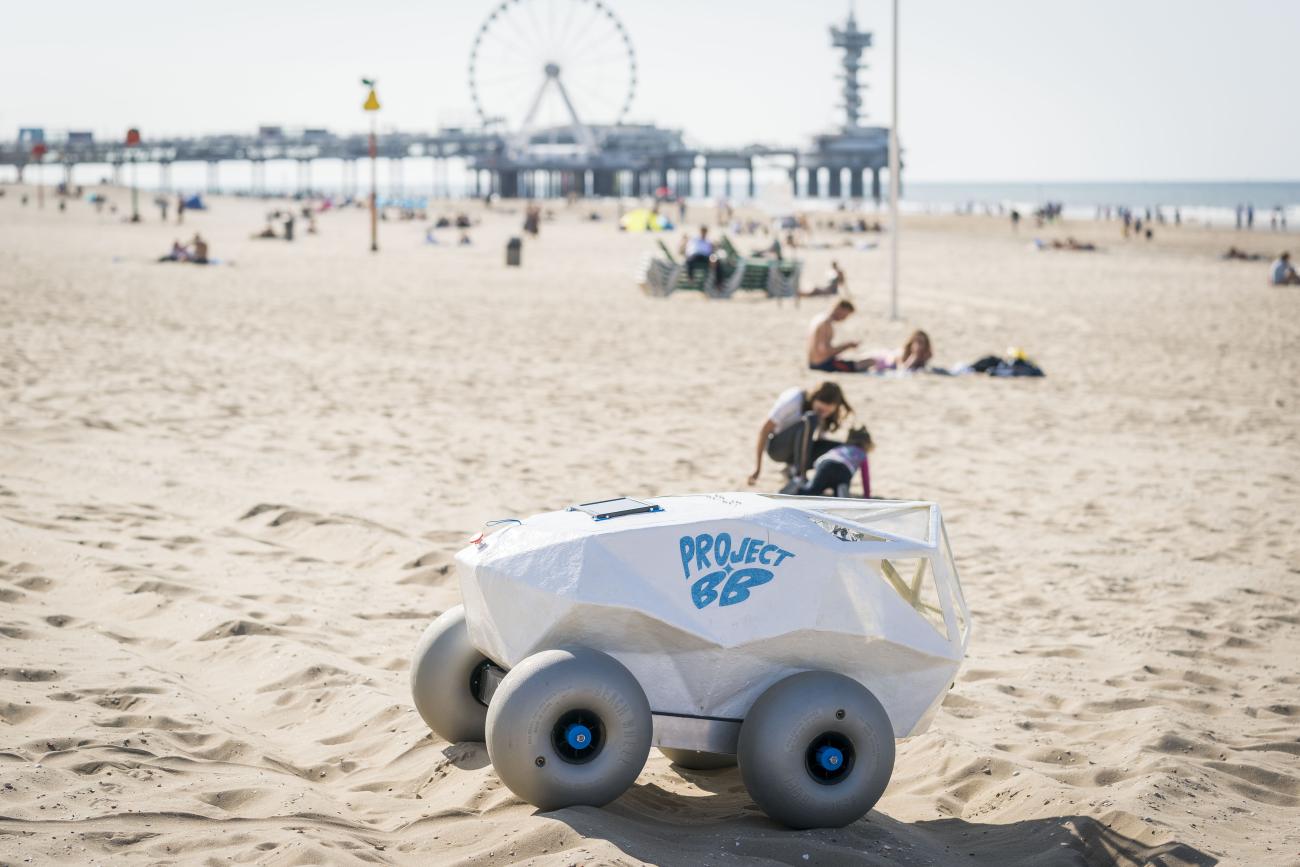
From managing beach crowds to sharing locally generated energy, The Hague is using the streets and public spaces of Scheveningen, a popular seaside district of the city, to test how digital technology can respond to real urban challenges.
Living Lab Scheveningen is a testing and learning environment stretching along the city’s coastline from Zwarte Pad to the Northern Harbour Head. Since 2020, the municipality has used the area to experiment with smart city infrastructure and practical applications in areas including safety, mobility, energy and liveability.
Unlike a closed testing site, Scheveningen is a place where people live, work and spend their leisure time. New technologies therefore have to operate under the same laws, practical constraints and public scrutiny they would face anywhere else in the city.
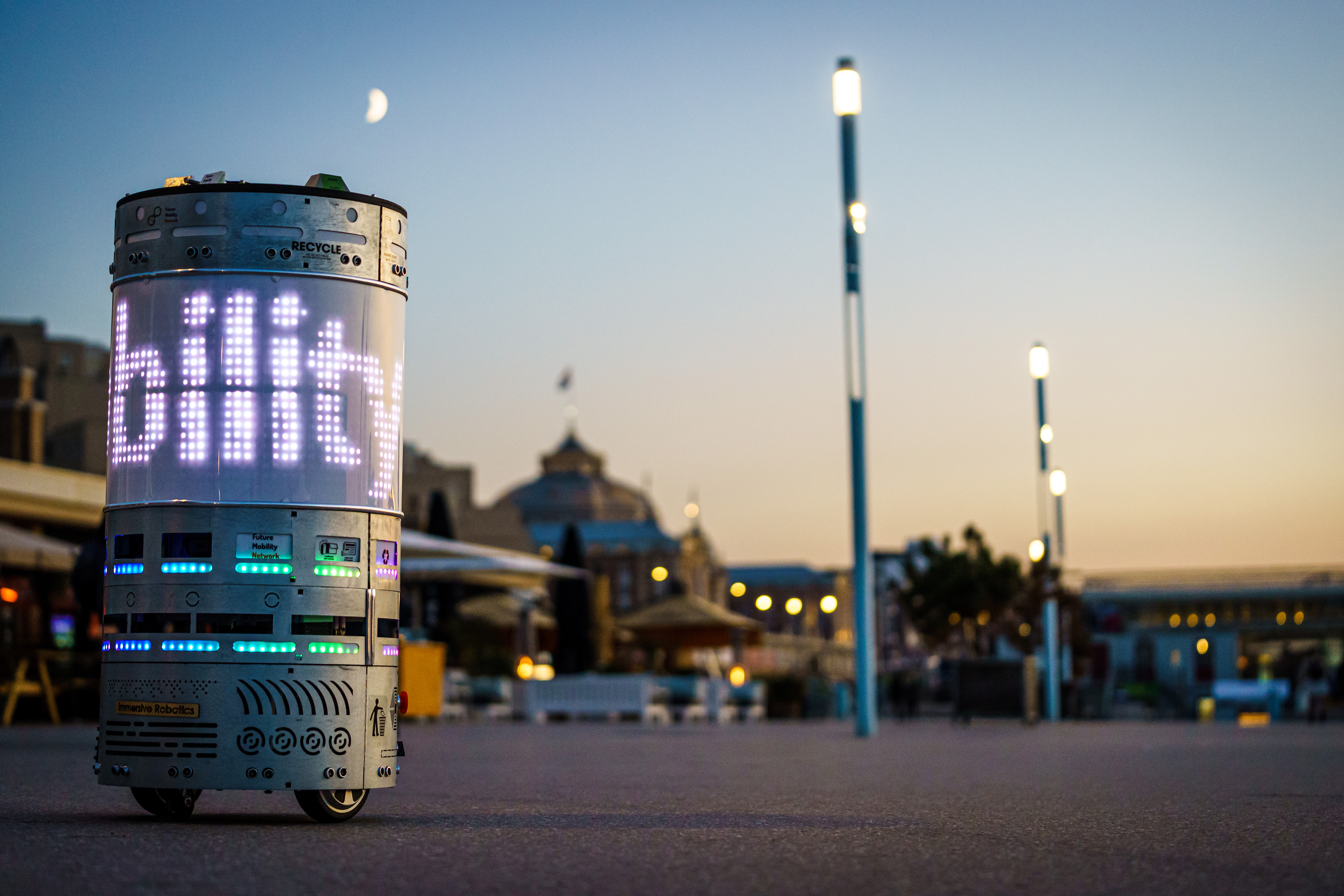
“As a municipality, we are constantly working on the future of the city,” says Saskia Bruines, Deputy Mayor of The Hague. “Preparing for the emergence of new technologies plays an important role in this.”
Building the infrastructure for innovation
At the heart of the living lab is a digital infrastructure built into Scheveningen’s public space.
An 11.5-kilometre fibre-optic network connects street furniture including lampposts and kiosks. Above ground, sensors, cameras, energy meters and wireless gateways can be connected to this network, allowing the municipality to test different applications without repeatedly digging up streets to install new infrastructure.
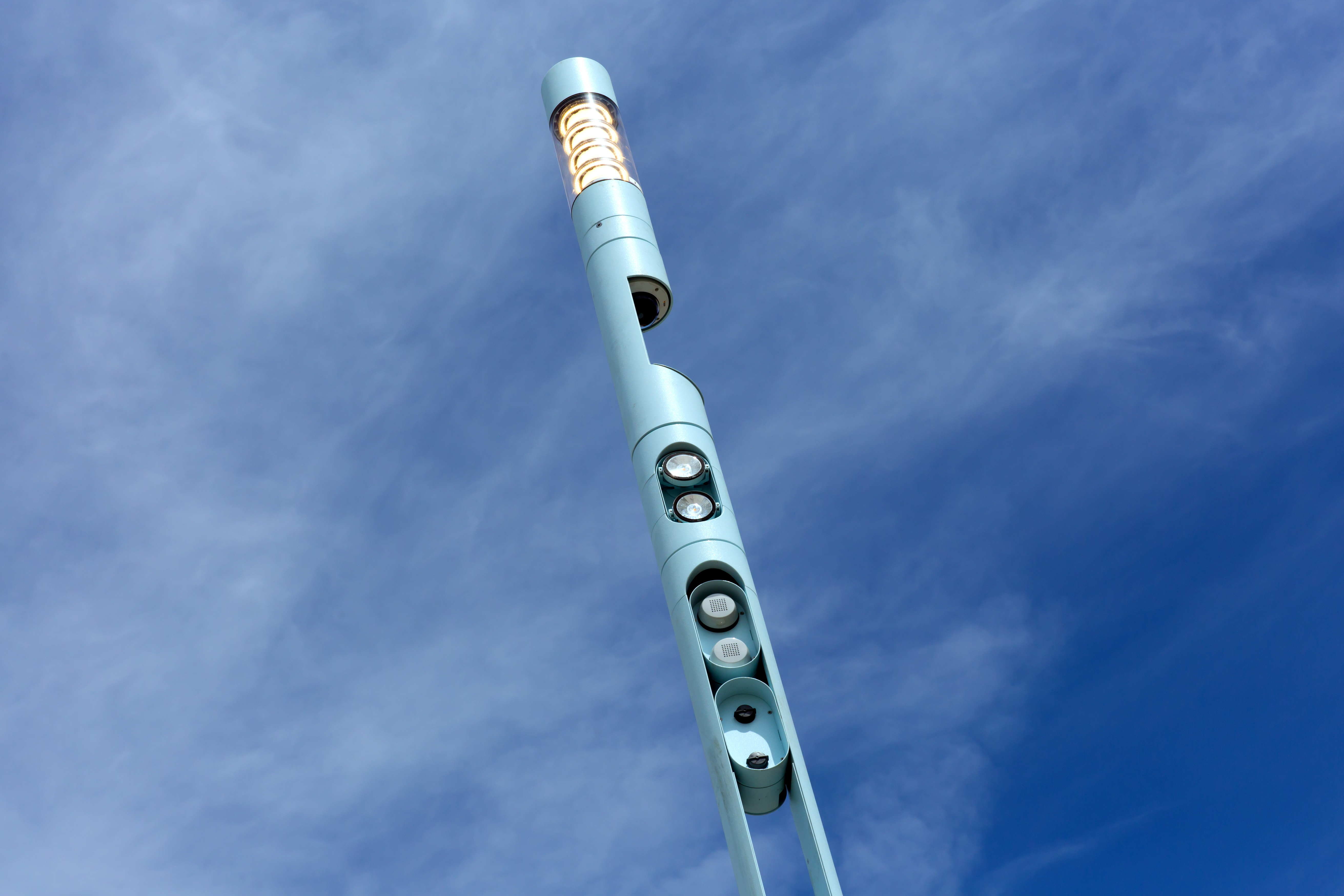
The municipality incorporated the infrastructure into the redevelopment of Scheveningen’s boulevard, allowing fibre to be laid while other construction work was already taking place. This reduced costs considerably compared with installing the network separately.
The Hague also chose to build and own the infrastructure itself. This gives the municipality greater control over its architecture and data sources and reduces dependence on individual technology providers.
Managing crowds more safely
One of the applications to emerge from the lab is the Crowd Safety Manager, an advanced 3D map designed to help the municipality and police understand congestion in real time. It brings together information including traffic counts, car park occupancy, public transport, anonymous visitor-counting data and weather conditions. This allows authorised municipal and police staff to anticipate overcrowding and take measures such as deploying traffic controllers, enforcement officers or police. Smart cameras can also measure crowd density. Rather than retaining images of individuals, images are converted at source into numbers of people and then immediately deleted.
The system was successfully tested in Scheveningen in 2022 and has since been used during beach seasons and major events elsewhere in the Netherlands, showing how an innovation developed in one neighbourhood can be scaled beyond its original setting.
Testing technology against real problems
Not every experiment in Scheveningen becomes a permanent service, and that is an important part of the model.
The living lab initially drew on around 150 ideas developed with residents, businesses and municipal departments. Some evolved into successful applications, including the Crowd Safety Manager, a harbour registration system and a smart energy grid. Others were stopped because they were too expensive, difficult to implement or did not perform well enough. A trial using sound sensors, for example, aimed to distinguish different sources of noise along the busy boulevard. The sensors were eventually removed because the recognition technology did not work sufficiently well and the resulting data could not be effectively integrated into municipal processes.
Another smart-camera application accurately detected potential nitrous oxide use, but the municipality decided not to continue with it because the problem had declined and the technology was no longer considered necessary.
The lesson is that successful urban innovation is not simply about proving that a technology works. It must also solve a continuing public need and be practical enough for the city to use.
Using smart infrastructure for the energy transition
The living lab is also testing how digital infrastructure can support more sustainable energy systems. Scheveningen’s Smart Energy Grid connects solar panels and heat pumps with charging stations, beach pavilions and facilities used for events. A smart battery stores electricity when renewable generation is high and supplies it when demand peaks. This allows local energy production and demand to be monitored, forecast and managed more efficiently, while helping address pressure on the electricity grid.
The experience is already being taken beyond the living lab. From 2024, grid operator Stedin began applying lessons from Scheveningen to other low-voltage grids.
Putting privacy and ethics into the experiment
Testing technology in public space also creates questions about privacy, data and public acceptance. The Hague therefore treats these issues as part of the innovation process rather than something to consider only once a technology is ready for deployment.
Tools including Data Protection Impact Assessments and Human Rights and Algorithms Impact Assessments are used to examine potential impacts in advance. The municipality also uses ethics workshops and other methods to consider broader questions about how technologies should be used.
Residents are involved through initiatives including the Smart@Sea festival, an Innovation Table and tours from the Scheveningen Info Point. Since 2020, around 2,000 residents, officials, councillors and other visitors have participated in these activities.
“Here, we can quickly test solutions to local issues and jointly shape the use of technology in our district,” says Mendy van Veen, City District Director Scheveningen.
A model for responsible urban innovation
Five years of experimentation have also changed how The Hague approaches innovation itself. The municipality increasingly starts with a concrete public problem and works with the responsible city department to determine whether technology can help. It has also developed a structured innovation process based on design thinking, with stages for developing, testing and deciding whether an experiment should continue.
Its wider lesson is that digital infrastructure should be considered alongside the design and management of public space, in much the same way as traditional infrastructure such as water and electricity. That philosophy continues to guide the living lab today. The city describes Scheveningen as a place for testing practical digital innovations while examining their effects on data management, privacy, safety and public acceptance, with successful solutions able to be scaled elsewhere.
As Bruines puts it, “The LLS is much more than just infrastructure. It is a platform in which we can experiment permanently, and in consultation with all stakeholders.”
**********
The Hague joined the Living-in.EU initiative in May 2025 and has since been attending working group meetings and learning about EU programmes and initiatives. The Living Lab Scheveningen is an example of the city’s approach to developing digital solutions and validating them in real-world context.