

Ghent's journey towards proactive services through life events
Making government work around citizens, not the other way around
When residents experience major life events, such as the birth of a child, moving home or losing a loved one, they often need support from multiple public authorities. Yet navigating government services can be complex. Information, benefits, obligations and support measures are frequently dispersed across different organisations and levels of government, requiring citizens to search, apply and repeatedly provide the same information. The City of Ghent is working to change this reality.
As one of the winners of the prestigious 2025 Bloomberg Philanthropies Mayors Challenge, Ghent received support to develop its ambitious Proactive project that reimagines how public services are delivered.
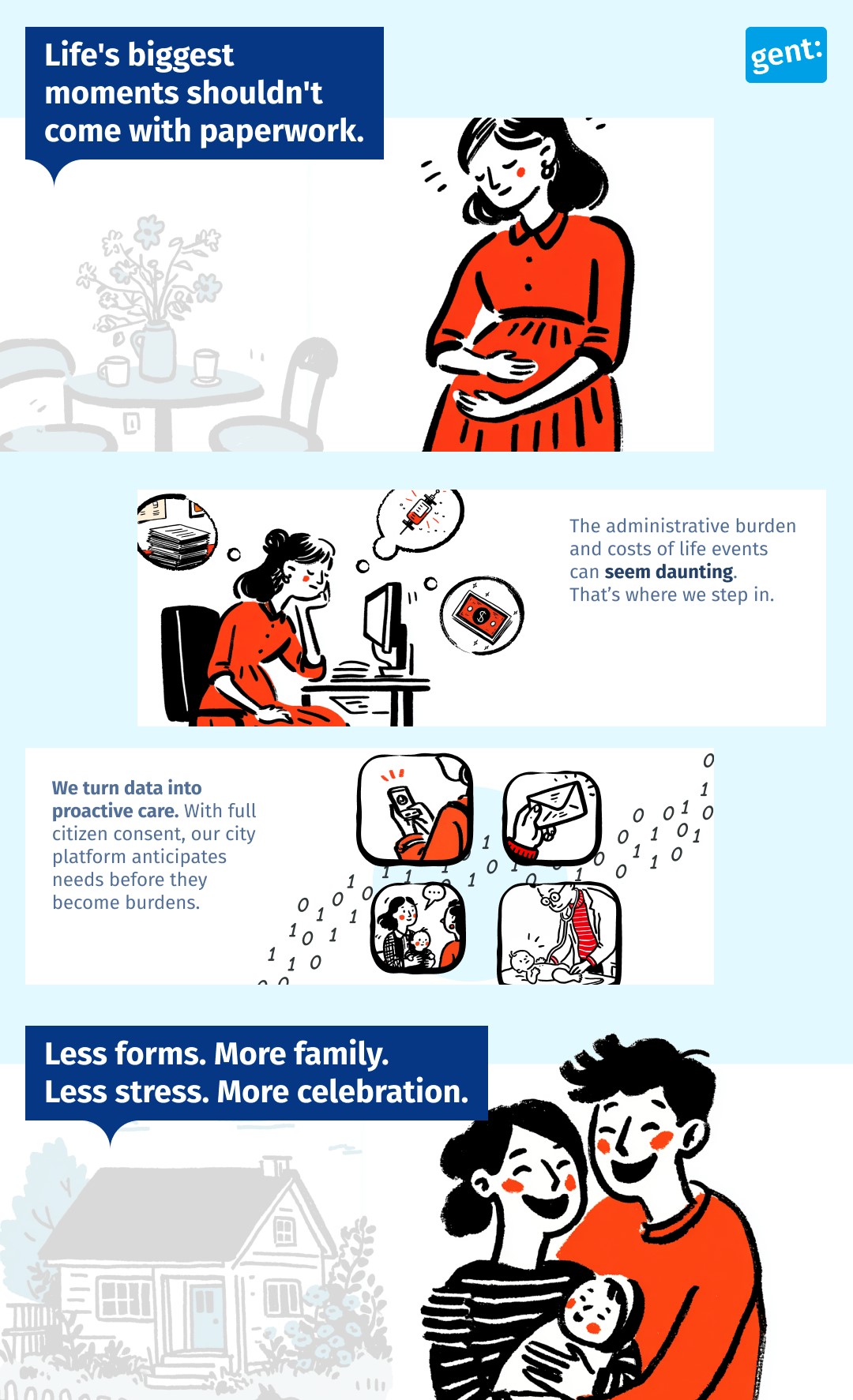
The project aims to build a new model for proactive government, offering residents a clear overview, connecting them with the benefits, allowances and services they are entitled to, and granting support automatically wherever legally and technically possible. Rather than organising services around institutional structures, Ghent is adopting a life-event approach that starts from the real needs of citizens.
Starting with the life event of having a child
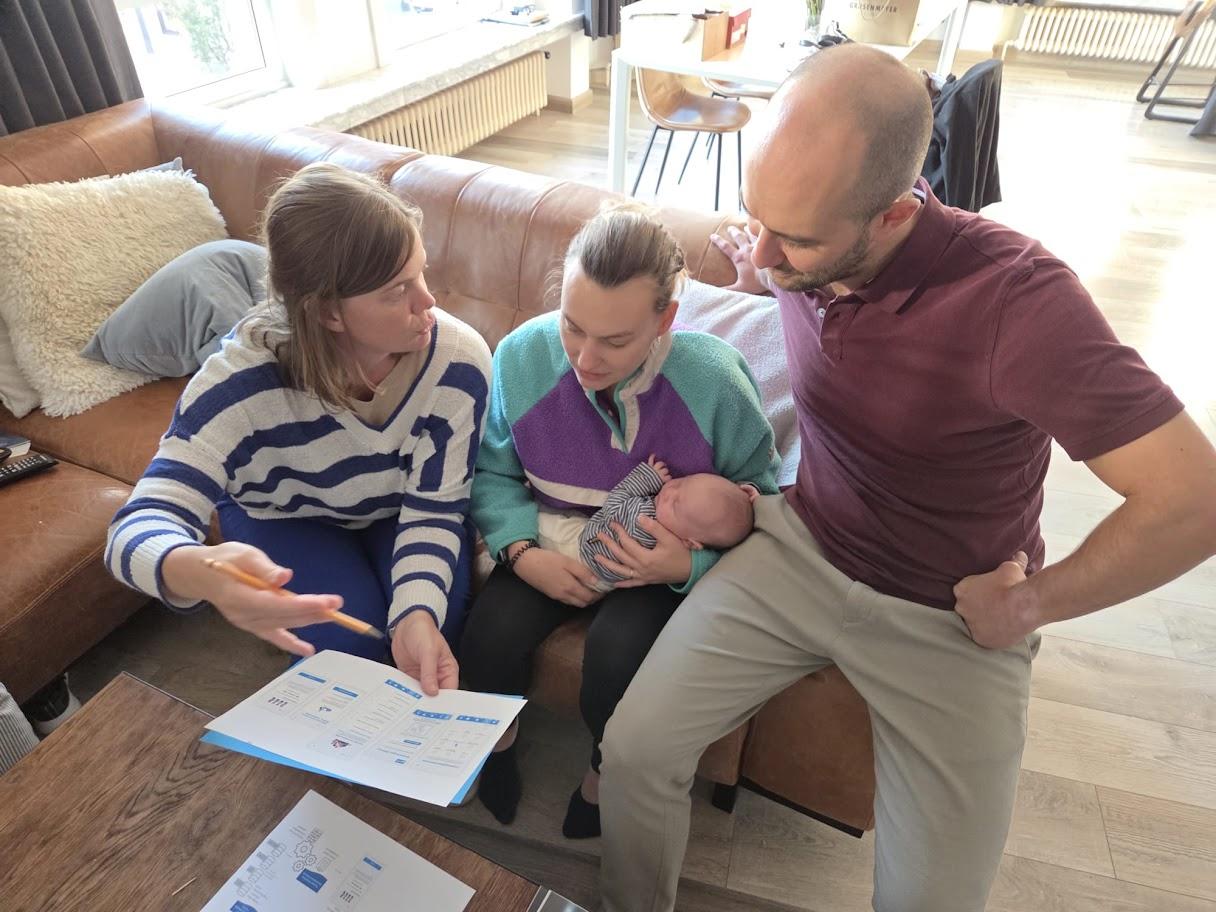
The first pilot focuses on the life event: ‘Having a Child.’ For many families, pregnancy and the arrival of a baby bring both joy and a considerable administrative burden. Parents need to interact with multiple organisations, comply with various procedures and understand a wide range of available benefits and support measures. The city of Ghent had already identified 68 different types of information, procedures and services.
Through this project, Ghent seeks to provide expectant and new parents with a single, coherent overview of relevant services, rights and obligations, regardless of which government level is responsible. The objective is simple: parents should spend less time navigating bureaucracy and more time caring for their child.
By using existing public data in a responsible and privacy-compliant manner, the city wants to:
- proactively inform residents about services and benefits relevant to their personal situation;
- simplify administrative procedures;
- maximise the ‘once-only’ principle, ensuring citizens do not need to provide the same information repeatedly;
- automatically grant rights and benefits whenever possible;
- create a seamless experience across local, regional and federal government services.
A human-centred and inclusive approach
The project is being developed through extensive collaboration with residents, intermediary organisations, public administrations and digital government partners. Particular attention is being paid to people in vulnerable situations, who are often less likely to access support because of administrative complexity, limited awareness or digital barriers. Early user research and co-creation sessions with parents and social organisations have already generated valuable insights about trust, consent, accessibility and the practical obstacles people face when interacting with government services. These insights help ensure that proactive service delivery is not only technologically feasible, but also meaningful, transparent and trusted by citizens.
Building a scalable model for the future
Running from April 2026 until March 2028, the project combines service design, digital innovation and legal analysis. Ghent will first develop an end-to-end proactive service model around the life-event of having a child. The project will map the full journey that expectant and new parents navigate across different levels of government, including administrative procedures, support services, benefits and entitlements. Based on this work, Ghent will create a user-friendly solution that helps families easily find relevant information, explore available support and understand which rights apply to their situation.
In parallel, the city and its partners will identify opportunities for more proactive service delivery, such as directly informing families about benefits they may be eligible for, guiding them towards relevant services, and even automatically granting rights and reduced tariffs where legally and technically feasible. By March 2028, these components will be tested and refined throughout the project and implemented for Ghent new parents. They will also serve as a blueprint for expanding proactive services to other life events in the future.
Activities are organised around three complementary workstreams:
1. Understanding citizen needs and service impact
The project team is identifying which services, benefits and support measures are most important for families and where proactive delivery can create the greatest social impact.
2. Developing a sustainable digital architecture
Together with public sector partners, Ghent is designing an interoperable and scalable architecture that can support future life-event services while remaining affordable and transferable to other municipalities and regions.
3. Exploring legal opportunities and constraints
The city is carefully examining the legal framework for proactive services and automatic entitlement delivery, ensuring that innovation goes hand in hand with privacy protection, transparency and citizens' rights.
A model beyond Ghent
Although the pilot starts with the life event of having a child, the ambition extends much further. The approach will be applied to many other key moments in people's lives, including moving house, starting school, entering retirement or dealing with bereavement.
By creating reusable building blocks, governance models and technical standards, Ghent aims to develop a framework that can be adopted by cities across Europe.
Ultimately, the project seeks to demonstrate how local governments can evolve from reactive service providers into proactive partners that anticipate citizens' needs and help ensure that everyone receives the support they are entitled to.
At its core, Ghent's vision is straightforward: public services should adapt to people's lives, not require people to adapt to government structures.
_____
The city of Ghent has been actively involved in the Living-in.EU movement since the early days. Experts from the city were involved in the alpha and beta testing of the LORDIMAS tool and the development of the Minimal interoperability mechanisms Plus. Ghent is also active in a number of related initiatives such as the data space for smart communities (DECIDe pilot project) and the application of generative AI in public administration.