

Amsterdam explores AI to give residents faster answers to public space reports
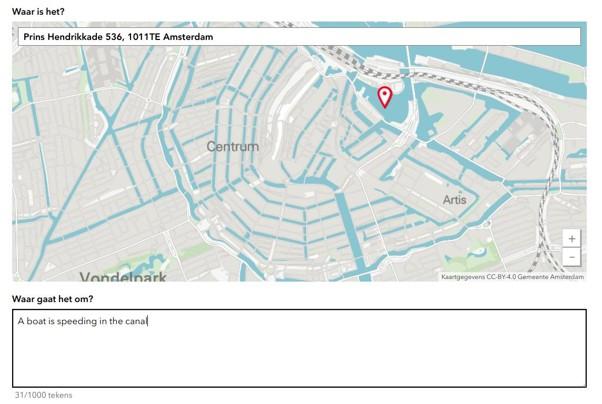
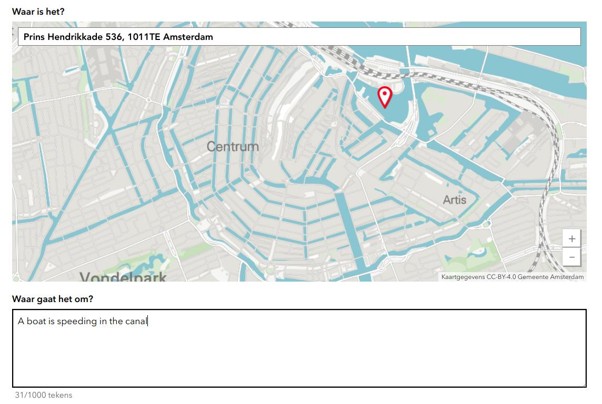
Around 25-30% of reports received by the City of Amsterdam about problems in public spaces require no further action. The issue may already be scheduled for repair, fall outside the municipality's responsibility or be covered by existing policy. Yet municipal staff must still review and respond to each report manually, taking up valuable time and resources.
Whether residents report rubbish on the street, a broken streetlight or another neighbourhood problem, they expect a clear and timely response. For the municipality, the challenge is to meet these expectations while reducing unnecessary administrative work.
To address this, Amsterdam's AI Lab has explored how artificial intelligence could provide faster, more useful responses in straightforward cases, freeing municipal staff to focus on problems that require human attention.
Giving residents an answer sooner
The proposed system uses a form of artificial intelligence known as Retrieval-Augmented Generation, or RAG. Rather than relying only on the information contained in an AI model, the system retrieves relevant information from municipal sources before generating its response.
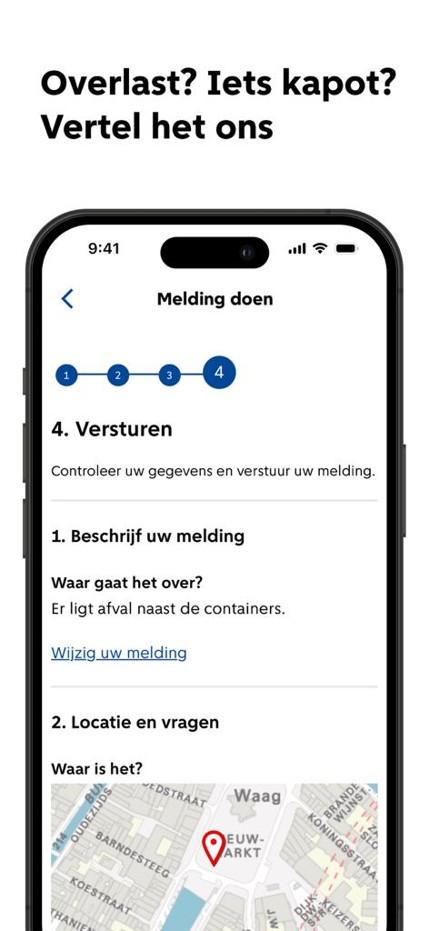
This could allow residents to receive an explanation tailored to their particular report. For example, the system could tell someone that work has already been planned, explain why the municipality cannot intervene or provide relevant information about existing rules and responsibilities.
The aim is not simply to automate communication. Amsterdam wants residents to receive responses that are clear, accurate and empathetic, while understanding what the municipality will do and why.
Faster responses could also help the city meet its service commitments more consistently. At the same time, municipal employees would have more time to investigate complex reports that require judgement or action.
Testing what residents expect from AI
User research has been an important part of the project. Surveys and testing found that residents were generally open to receiving AI-generated answers for simple reports, provided that they could still contact a person when necessary. Speed and simplicity were important, but so was transparency about when AI was being used.
Trust remains crucial. Residents need to know that information is accurate, their privacy is protected and an automated system will not leave them without another way of contacting the municipality.
The project also identified the potential for multilingual responses, which could make municipal information easier to access for residents who do not speak Dutch as their first language.
Connecting AI with municipal information
Behind the proposed service is an approach known as Agentic RAG. The system can use different tools to search municipal information sources and bring together the material needed to answer a particular report. It can then generate a response based on that information rather than producing an answer from the AI model alone.
Tests found that the approach was promising at finding and combining relevant information from different municipal sources. However, Amsterdam also identified areas requiring further work, particularly the tone and style of responses and some of the wider limitations associated with large language models.
The architecture has deliberately been designed to be modular. This means the city could change the underlying AI model, connect additional information sources or adapt individual elements as the technology develops.
Building responsible AI into the service
Amsterdam is also examining the wider consequences of introducing generative AI into a public service, particularly how to protect residents' privacy, ensure fairness and maintain public trust.
Ethical workshops have assessed the project against the city's principles for responsible AI, exploring risks such as biased or inaccurate responses, unequal treatment of residents and the potential loss of human interaction.
This work reflects Amsterdam's Vision on AI, developed through discussions with residents, municipal staff and experts. The vision places particular emphasis on protecting digital rights, maintaining control over data and ensuring that AI serves the public interest.
Privacy and the careful handling of personal information are central concerns. Residents may share sensitive details when reporting problems, making it essential to assess how their information is accessed, processed and protected, including when external technology providers are involved.
The city also stresses the importance of transparency about AI use, human oversight and maintaining alternative ways to access municipal services. The aim is to use AI to improve public services without compromising residents' rights or making them dependent on automated systems.
Considering AI's environmental footprint
The city is also looking at an issue that can be overlooked when generative AI is introduced: energy use. Large language models can require considerable computing resources, particularly when a service makes several AI requests for each interaction.
Amsterdam is therefore exploring ways to reduce the number and length of AI calls and use smaller, task-specific models where possible.
Self-hosted open-source models could also give the municipality greater insight into resource consumption and allow different approaches to be compared. The objective is to balance service quality with environmental impact and operating costs.
Starting small before scaling up
The project remains an exploration rather than a fully deployed automated service. Amsterdam's AI Lab recommends beginning with clearly defined cases, such as duplicate reports or reports where existing policy already determines the answer. Performance requirements, including accuracy, transparency and tone, would be established before broader use.
The technology could then be tested with small groups of residents and improved using their feedback before being introduced more widely.
If successful, the approach could eventually have applications beyond public space reports. Similar technology could potentially help residents navigate municipal processes such as permit or subsidy applications, while the modular system could also be adapted by other municipalities.
Amsterdam's experiment illustrates both the opportunity and the challenge of bringing generative AI into everyday public services. The technology could provide faster information and reduce routine administrative work, but the city's approach also recognises that accuracy, transparency, human oversight and accessibility must come first.
The result is a model of AI innovation focused not simply on what the technology can do, but on whether it improves the experience of residents and the people delivering public services.
____
Amsterdam is a long-standing signatory of the Living-in.EU initiative and an active member of the Eurocities Digital Forum. It is one of the pioneer cities on AI transparency and one of the nine cities behind the Algorithmic Transparency Standard for cities, developed in 2023 by the Eurocities Digital Forum Lab based on Amsterdam and Helsinki's registries. Neeltje Pavicic, Project Manager at the City of Amsterdam, acted as chair of the Living-in.EU Education and Capacity Building Working Group. Amsterdam was also one of the partner cities in CommuniCity, a large-scale project developing AI-based digital solutions for vulnerable groups in cities.